All Employees should identify the fire exits and assembly points closest to their normal place of work; and in the event of the alarm sounding must leave the building immediately. There are designated ‘evacuation points’ on floors above ground level through the University of Worcester buildings for people with disabilities to wait for evacuation.
Video Tours
Video tour of Edward Elgar First & Second Floor Tour.mp4
Video tour of Edward Elgar Ground Floor Tour.mp4
Fire Safety Essentials
Click the video to access the short video or click this link here

Fire Alarm Sound
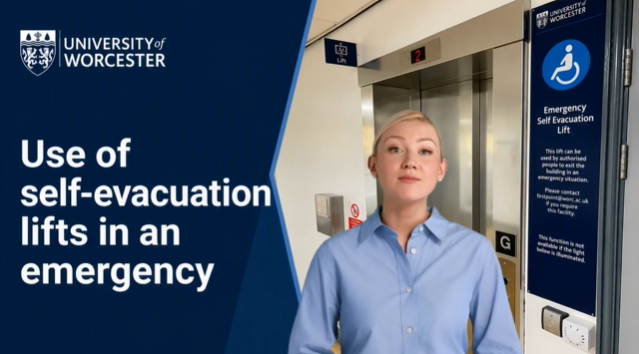
Use of the Self Evacuation Lifts
Click the image or Follow this Link to watch the video on the use of the fire evacuation lift.
How to use an emergency refuge point.
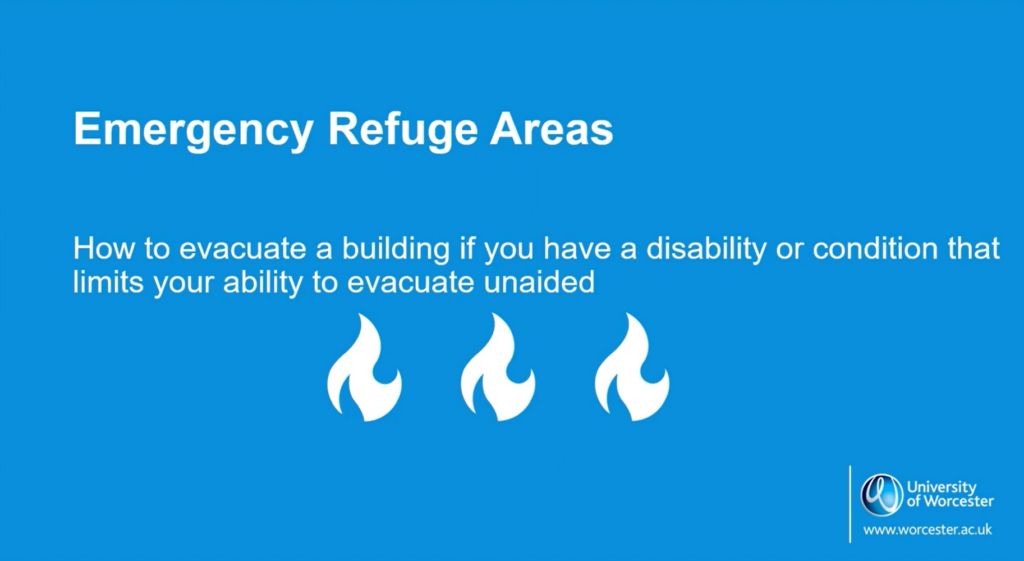
Click the image above or Follow this link to watch the video
General
Fire/Emergency Evacuation Procedure
Fire Evacuation Evaluation Form
Map of Assembly Points
St Johns Campus Assembly Points

City Campus Fire Assembly Points

Severn Campus Fire Assembly Points
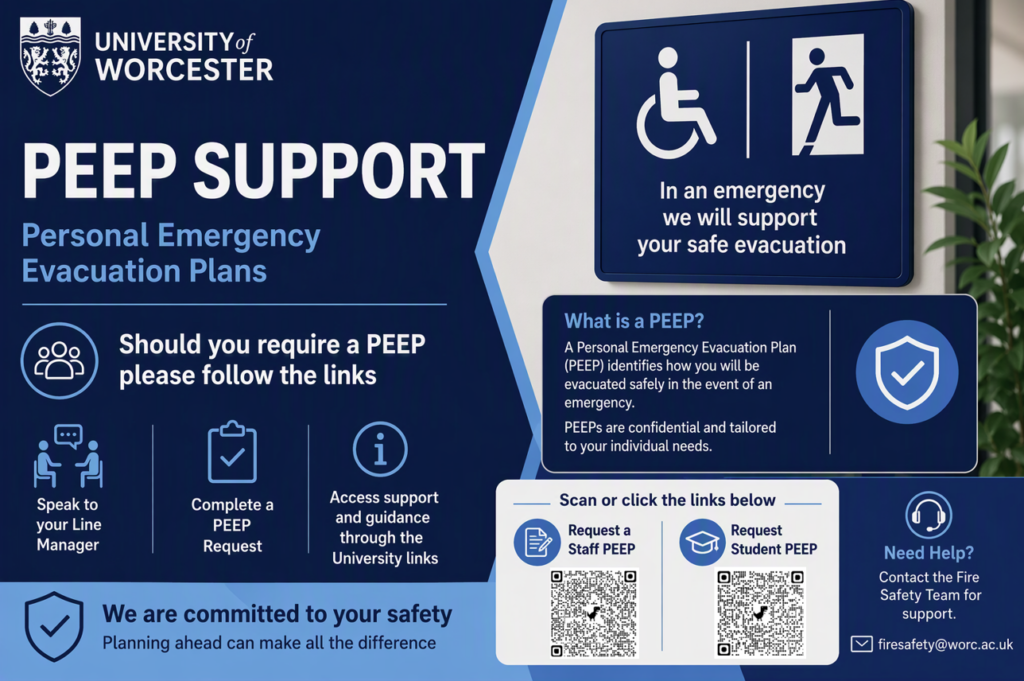
Personal Emergency Evacuation Plans.
These are individual plans designed to help people who may need assistance during an emergency evacuation, such as a fire or other incident.
When we talk about short-term issues versus long-standing issues in the context of PEEPs:
Short-Term Issues
These are temporary conditions that affect a person’s ability to evacuate safely. Examples include:
- Someone with a broken leg or recovering from surgery.
- A pregnant employee in later stages.
- A visitor with a temporary mobility impairment.
Key point: The PEEP is needed only for the duration of the condition. Once the person recovers, the plan can be removed.
Long-Standing Issues
These are permanent or ongoing conditions that require continuous support. Examples include:
- People with mobility impairments (wheelchair users).
- Individuals with visual or hearing impairments.
- Those with chronic health conditions that affect evacuation.
Key point:
The PEEP remains in place indefinitely and should be reviewed regularly.
PEEP Support
Should you require a PEEP please follow the links below or scan the QR Codes.